While my wife and I were visiting my folks in South Florida for Thanksgiving, we spent some time at Everglades National Park. We went to Shark Valley on the northern edge of the park, which gets its name from the Shark River Slough, a broad watery plain, which drains into the Shark River. Water from Lake Okeechobee flows through this area from the north-northeast to the southwest into Florida Bay. The Shark River Slough is commonly called “the river of grass”, for the tall sawgrass marsh which covers the Florida limestone. Shark Valley features a 15 mile loop road, open to hiking and bicycling, and a tram tour of the loop.
Shark Valley
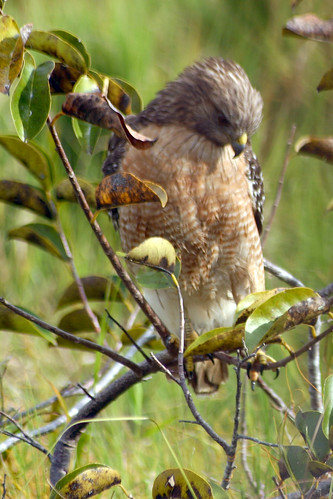
The Red-shouldered Hawk is the most common hawk found in the Everglades.

The Great White Heron is a tropical wading bird related to the Great Blue Heron, and in North America is most often found in South Florida. Great Egrets are found throughout the world. The North American subspecies can be found as far north as Southern Canada. [Note: I originally misidentified this bird. See the comment below.]
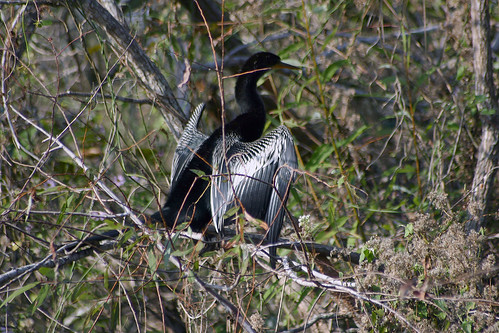
An Anhinga suns itself to dry its wings. It dives underwater to catch fish. This one is male; female Anhingas have a lighter colored neck.
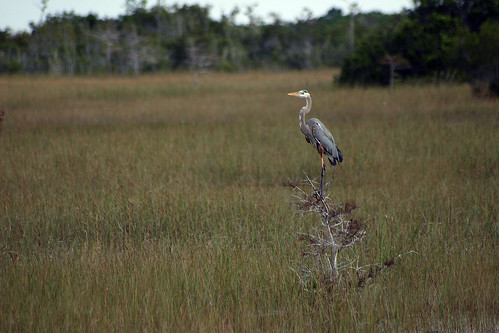
The Great Blue Heron is found throughout the United States. It is a wading bird closely related to the Great White Heron.
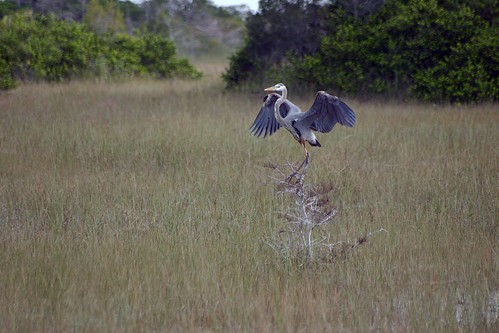
A Great Blue Heron spreads its wings.
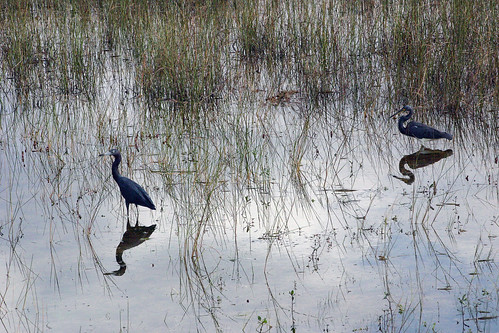
Tri-color Herons are a cross breed of the Great Blue and White Herons.
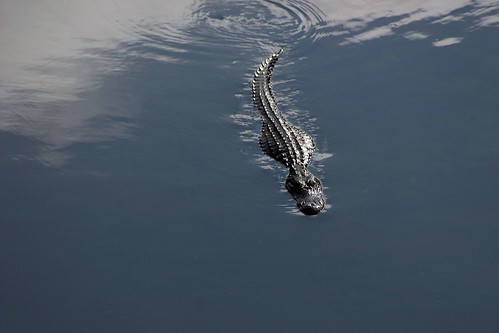
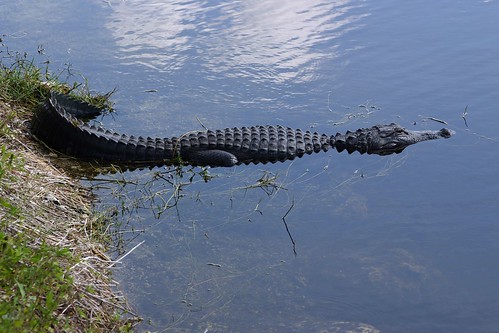
The king of the Everglades: the American Alligator. We watched as this alligator swam gracefully through the water.
The alligator is central to the survival of the Everglades. Alligators dig out pockets in the limestone, known as “Gator holes”. During the dry season which occurs from December through April, these holes become an oasis for many of the park’s insects, turtles, fish, and birds.
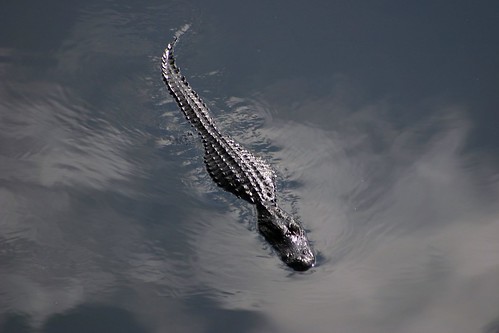
The American Alligator is no longer an endangered species in Florida. They are commonly found in the fresh water sawgrass marshes of the park.
Also, found within the park’s boundaries is the American Crocodile, an endangered species whose only remaining habitat in the United States is the Southern tip of Florida. Everglades National Park is the only place in the world where both alligators and crocodiles exist in close proximity. Crocodiles in the Everglades are located along the coastal areas in the brackish waters of Florida Bay.

The landscape of the Florida Everglades. Taken from atop the viewing tower at the mid-point of the tram tour. The clumps of trees that can be seen in the distance are hardwood hammocks. The hammocks are pockets of limestone rising above the sawgrass prairie which have been built up over time with sediment deposited by the water flowing through Shark River Slough. South Florida is a sub-tropical region, so the hammocks support both tropical trees, such as mahogany, gumbo limbo, and cocoplum, and temperate trees, like live oak, red maple, and hackberry. Many types of orchids and ferns grow under the shade of the tall trees of the hardwood hammock.
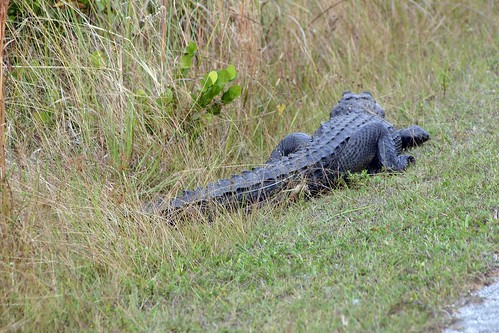
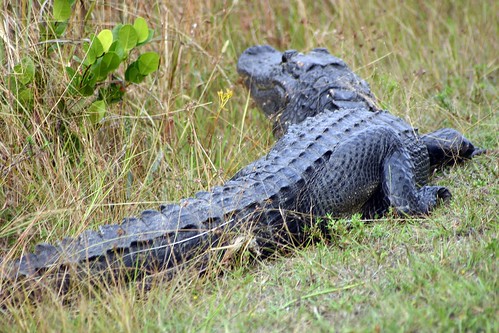
Another alligator along the side of the road.
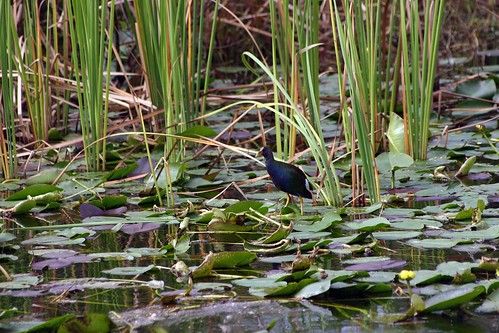
A Purple Gallinule walks upon the spatterdock.
Big Cypress National Preserve
Next, we decided to drive a bit farther down Tamiami Trail to Big Cypress National Preserve Visitor Center. In front of the Visitor Center, the park service has built a viewing platform, which overlooks a stretch of the canal alongside Tamiami Trail. I took the next series of photographs from this vantage point.
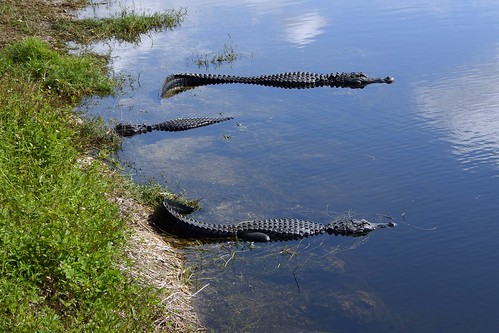
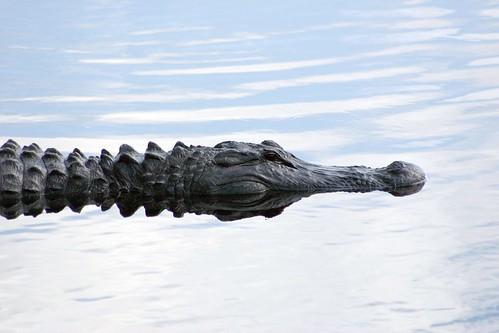
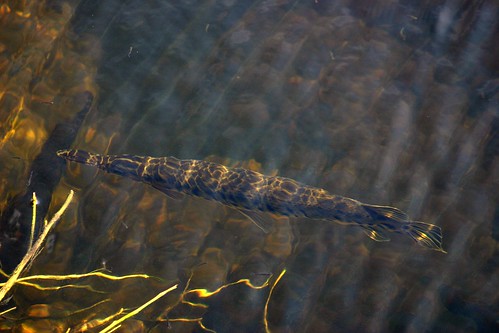
Florida Gar is a freshwater fish found mostly in the lakes, rivers and canals of South Florida.

The body temperature of an alligator is dependent upon the temperature of its environment. To maintain a constant body temperature, alligators will move in and out of the water, sunlight and shade, remaining motionless for long periods of time. This behavior allows an alligator to survive on less food. This can be especially important if the dry season in the Everglades is extended, resulting in fewer food sources. An alligator’s diet includes insects, crabs, crayfish, fish, frogs, snails, turtles, snakes, wading birds, raccoons, otters, deer, and other alligators.
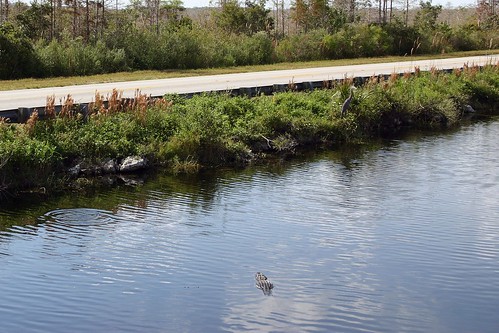
A Great Blue Heron observes as an alligator swims to the opposite bank of the canal.
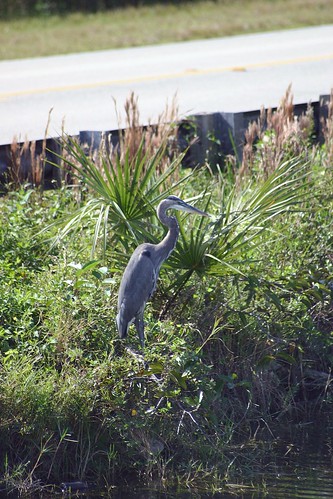
One last photograph of a Great Blue Heron.